
Hierarchy and Equality
Reading History With Premodern and Modern Lenses

We reject hierarchy and embrace equality. That is our contemporary (and modern) moral distinction.
And I’m not here to argue that we do the opposite. Yet I think when we are reading or writing history of the past, we should be aware that not just that people in the past held different values but also that our cherished values might not be what they are, might not be as absolute as we believe.
Although our moral compass generally points one way, that is towards equality, we live with hierarchy and equality in terms of degrees, not absolutes. In various domains of our lives—at home, at work, as family members, and as employees—we exist within inherently hierarchical structures. This reality challenges our perception of ourselves as absolute advocates of equality.
The complicated aspect of hierarchy and equality becomes even more obvious when we try to understand and write about premodern history. In the introduction of this newsletter I mentioned Beyond the Bronze Pillars, an examination of poetry written by premodern Vietnam’s literary scholars who travelled to China.
The overall aim of Beyond the Bronze Pillars is to lessen the impact of modern distinctions on our interpretation of Sino-Vietnamese history prior to the twentieth century—a modern period for many postcolonial states like Vietnam that saw significant changes in political, social, economic, and psychological domains.
Some critics of the book argue that envoy poetry cannot be used to show that Vietnam’s acceptance of vassalage status to China, suggesting that diplomats had to feign acceptance of a lower status. Yet this criticism itself may be affected by modern notions of equality between the states and the rejection of hierarchy. In premodern East Asia, concepts of hierarchy and vassalage were not formally rejected as they are in today’s international relations.
It’s not too controversial to state that when we write or read history, whether recent or from a thousand years ago, we do it so from the present, with today’s values. The valuation serves as a moral compass, helping us how to live. It is from the point of the present that we understand the past as well as how to plan for the future.
One problem, I think, with reading premodern history is having to assess the anachronistic use of words like China or Vietnam, which the people of those times did not use them. When Vietnam is used in either contemporary writing or writing about the past but written in modern times, the idea of nation-name is imbued with self-determination (freedom), transparency (self-knowledge) and racial/ethnic purity. These ideas are more than just ideals but existential goals not just for modern Vietnamese but for other societies as well. To address this issue of reading and writing history, is not better to use terms like Northern Kingdom and Southern Kingdom when referring to China and Vietnam, respectively?
Another problem with reading and writing premodern history is having to re-orient ourselves to a time when the ideas of hierarchy and vassalage were not rejected formally. In modern international relations, formal equality is a moral virtue in which every state desires. Understandably, the Socialist Republic of Vietnam does not want or perhaps even allow others to think that it could be a subordinate to its northern neighbor. As I discussed earlier on the power of modernity, every nation that is to become industrialized has to formally declare all citizens are equal, thus abolishing monarchy and establishing a republic. The same morality is also applied at the level of between nations, or inter-national.
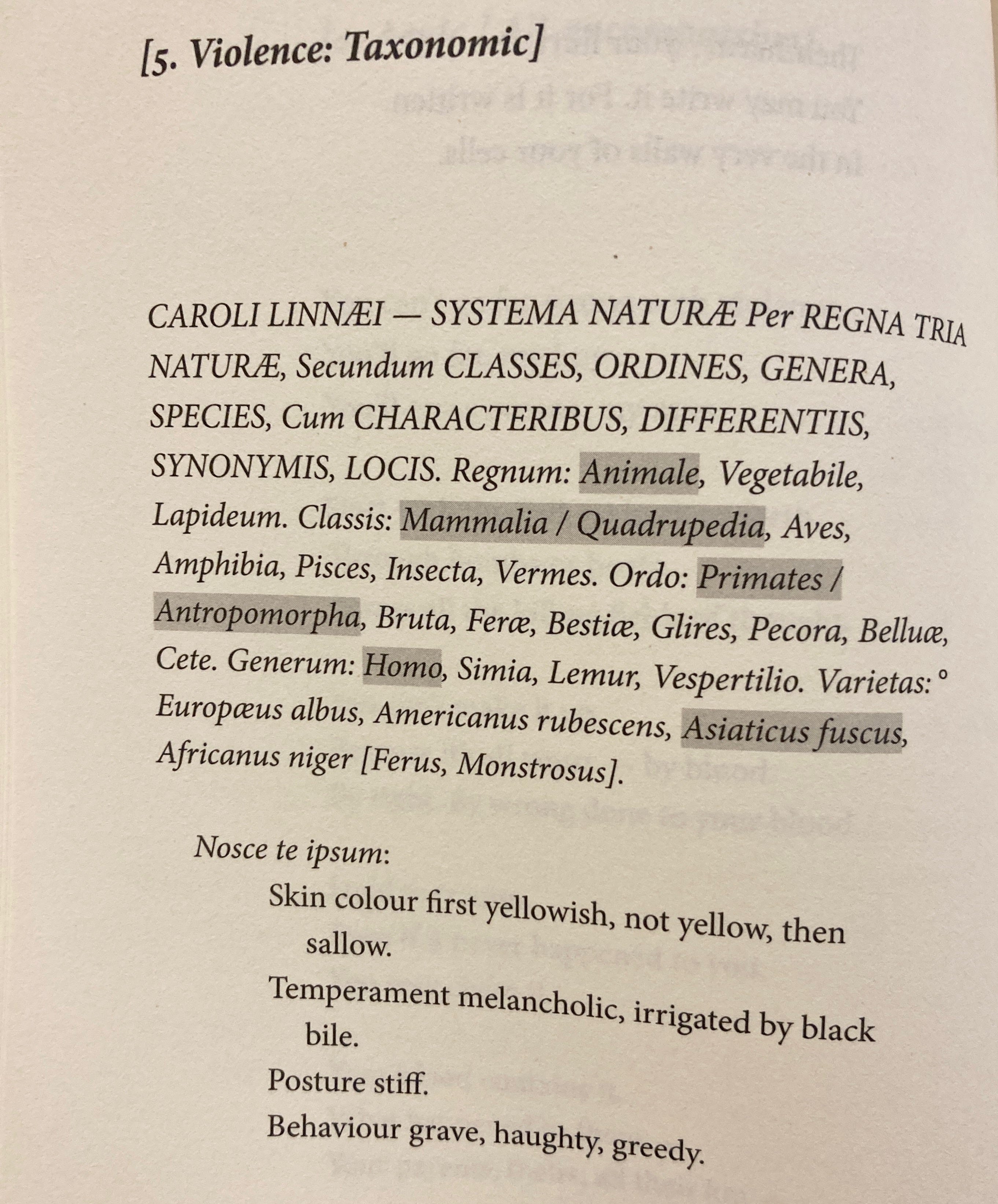
And there might be a meaningful difference between modern, contemporary hierarchy and premodern hierarchy that was understood in East Asia. Contemporary hierarchy, I think, derives from modern (as in nineteenth century) taxonomy (and biology) and its power to group and categorize numerous things in nature, including the human species and different societies.
The power of taxonomy spread through the events of colonialism, imperialism, and later decolonization. Decolonization was not rejection of Western values and science, foundations that would create a new system of reality. One enduring aspect of this modern naming and categorizing system is that it attaches superiority (higher status) to the idea of origin and if something else is considered to be derived from that origin it has a lesser status, given the label of (sub)group. This group is below or subordinate to higher groups in this system of reality.
To say that Vietnam, South Korea, or Japan derives its culture from China is to place the former into a (sub)group, thereby giving it lesser status that the originator of Sinitic culture, China. In the case of Japan, its modern power and culture has been largely derived from Western values and technology. Both Japanese distinctiveness and homogeneity, paradoxically, reflects profound Westernization. Yet this transformation is looked upon as a good thing, despite in its early modern history, Japan adopted some of the worst aspects of the West.
I think the premodern system of hierarchy might not carry itself with racial/ethnic categories connotations backed, though not as strongly as before, by modern biology.
For postcolonial scholars and writers and for anyone familiar with the trials and tribulations of modern Vietnam, it is sensible with regards to the project of modernity—establishing a republic, possessing self-determination and transparency, and be free from foreign oppression—to consider Vietnam joining the international community as an equal among nations is a good thing.